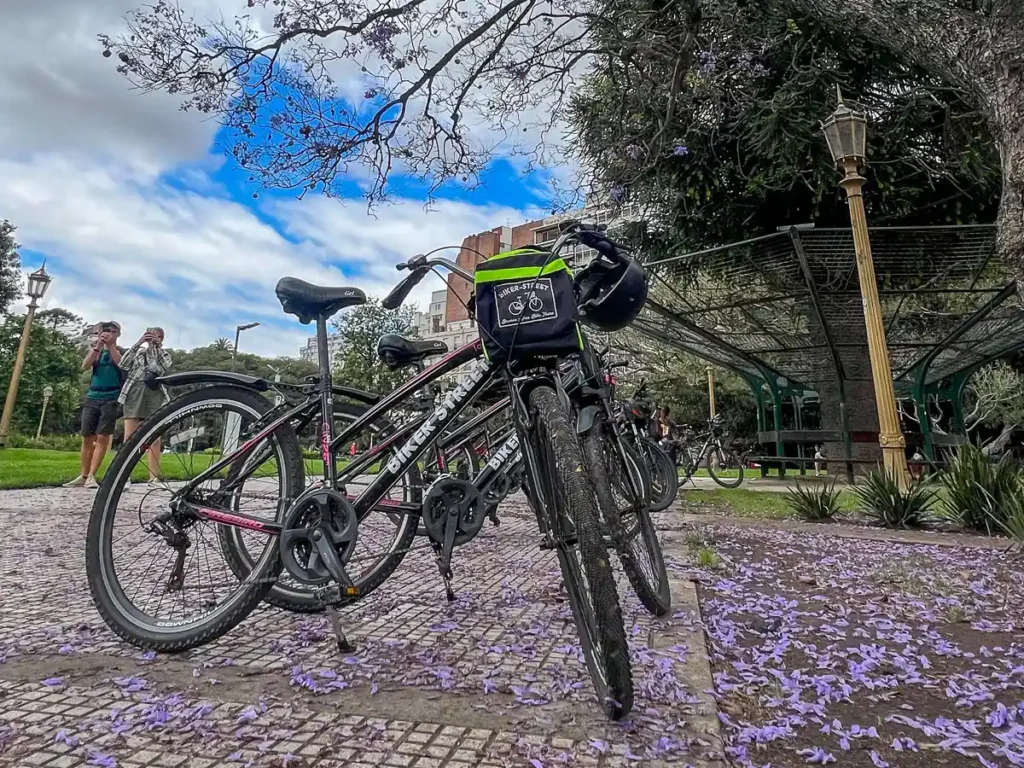


Buenos Aires is known for its grand architecture, tango, and bustling streets, but during spring, something magical happens: the city turns purple.
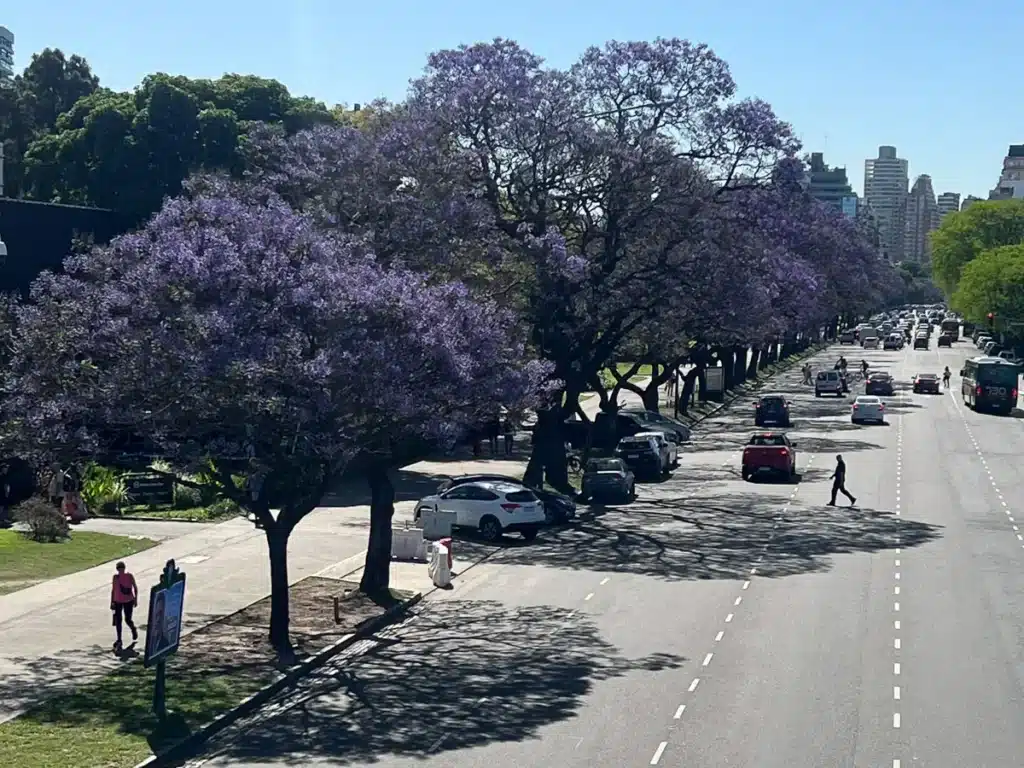
The jacaranda trees, with their stunning lavender blooms, decorate the streets, making it one of the best times to visit the city.
These trees are more than just decoration; they’ve become a symbol of Buenos Aires’ beauty and charm.
10 Years. 10/10 Experience. Up to 10% OFF.
Where Do Jacaranda Trees Come From?
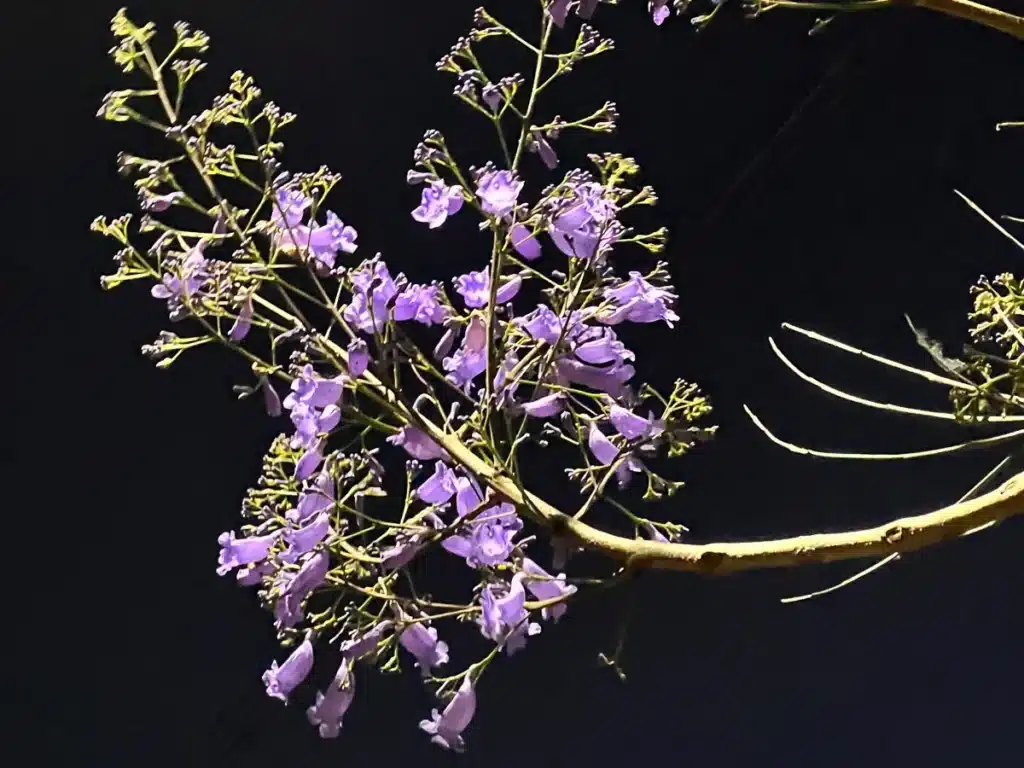
While they’re famous around the world—in cities like Sydney, Pretoria, and Seville—jacarandas are native to South America, specifically from regions like Brazil, Bolivia, and northern Argentina.
They were introduced to Buenos Aires in the early 20th century by the French-Argentine landscape architect Charles Thays, who was behind many of the city’s green spaces.
When Do Jacarandas Bloom?
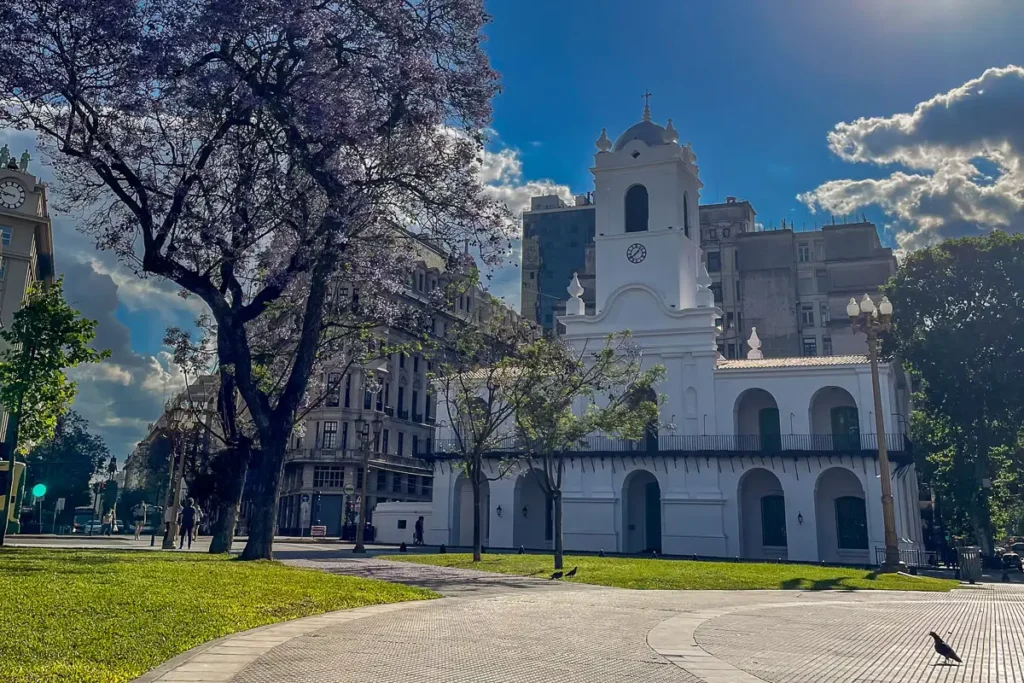
Jacarandas usually bloom in Buenos Aires from mid-October to November, with the city often reaching its most spectacular purple display in November. The exact timing can vary from year to year depending on the weather, so there is no fixed date for the bloom.
If you’re visiting Buenos Aires in spring and want to see the jacarandas at their best, November is generally your safest bet. By then, many of the city’s jacaranda-lined streets and parks are covered in purple flowers, creating some of the most beautiful urban scenery of the year.
Where Can You Find Jacaranda Trees in Buenos Aires?
There are many places in Buenos Aires where you can admire jacaranda trees, but a few spots are particularly special:
- Sarmiento Avenue: One of the most beautiful places to see jacarandas in Buenos Aires is along Sarmiento Avenue in Palermo, particularly around the Ecoparque area. In spring, the trees create a beautiful purple canopy along the avenue, making this a great spot for a walk or bike ride.
- Parque 3 de Febrero (Bosques de Palermo): The large green spaces of Parque 3 de Febrero, also known as the Bosques de Palermo, are home to many jacaranda trees. The contrast between the purple flowers and the park’s lawns, lakes and paths makes this one of the best areas to enjoy the jacaranda season.
- Recoleta: Jacarandas are also scattered around the elegant streets and green spaces of Recoleta. They are particularly beautiful around the parks and avenues near Recoleta Cemetery, where the purple flowers add a splash of color to the neighborhood’s grand architecture.
- Puerto Madero: Puerto Madero offers another interesting setting for jacarandas, with trees growing along some of its streets and green spaces. It is an especially nice place to see them while exploring the contrast between Buenos Aires’ historic center and its modern waterfront.
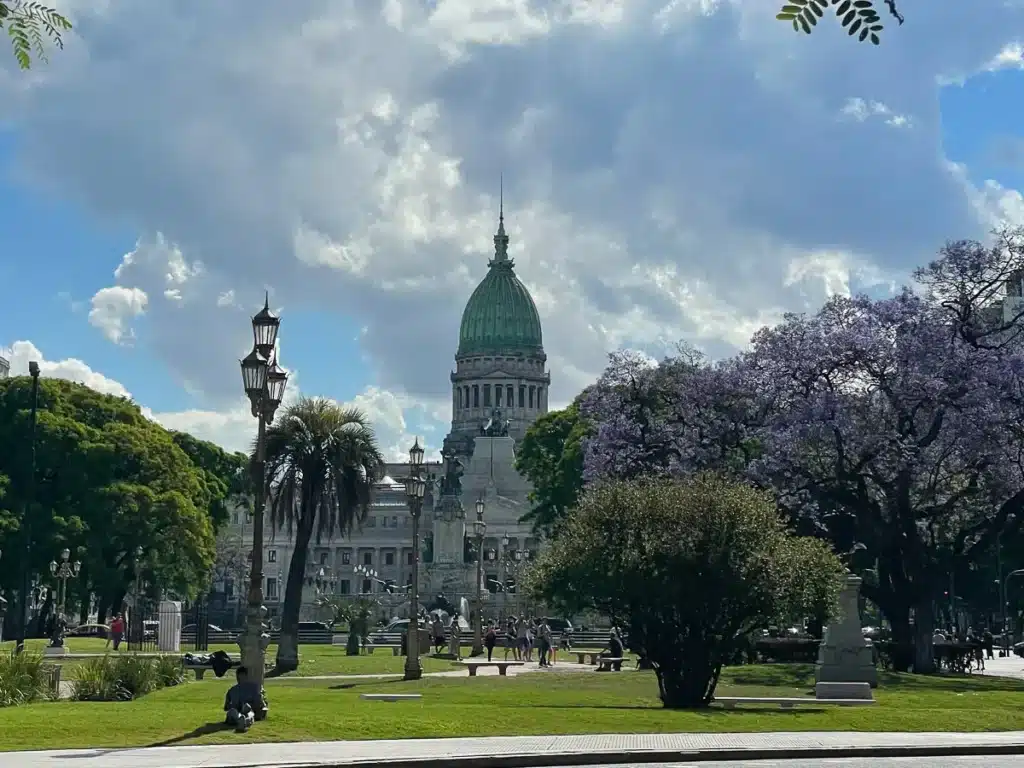
- Microcentro: You can also find jacaranda trees in parts of downtown Buenos Aires, adding unexpected touches of purple among the city’s historic buildings and busy streets. Plaza San Martín and the surrounding area are particularly worth exploring during the blooming season.
A Season to Remember
Experiencing Buenos Aires in full bloom is truly special.
The jacaranda trees not only add a splash of color to the city’s streets, but they also create a unique atmosphere that enhances the charm of Buenos Aires.
Whether you’re strolling through parks or biking down jacaranda-lined avenues, this vibrant purple season is one you won’t want to miss. If you want to experience Buenos Aires during jacaranda season, exploring Palermo and Recoleta by bike is a great way to see several of these purple-lined streets in a single ride.